
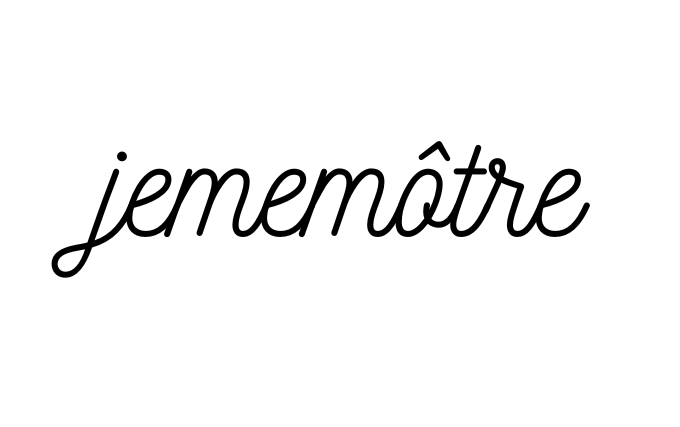
Language is full of unusual constructions that spark curiosity, especially when a word appears to echo a familiar linguistic pattern but does not clearly belong to any known dictionary. One such intriguing term is jememôtre. At first glance, it feels French-inspired, almost like a reflexive phrase or a compound verb, yet it does not correspond to a standard word in modern French or other widely used languages.
Because of this ambiguity, jememôtre becomes an interesting subject of linguistic exploration. It invites us to break it apart, examine its possible roots, and understand how such hybrid or invented terms can carry meaning in digital culture, creative writing, and evolving language trends.
What Does “Jememôtre” Mean?
At present, jememôtre does not appear in standard French dictionaries or established linguistic databases. This strongly suggests that it is either:
- A neologism (a newly coined word)
- A constructed or artistic term
- A phonetic or stylistic variation inspired by French
- A conceptual keyword used in creative or digital contexts
Even though it lacks formal definition, its structure resembles French grammar patterns, making it interpretable through linguistic analysis.
Breaking Down the Word: “Je me môtre”
To understand jememôtre, we can segment it into parts:
1. “Je”
In French, “je” means “I.” It is the first-person singular subject pronoun.
2. “me”
The reflexive pronoun “me” translates to “myself.” It is used when the subject and object of the verb are the same person.
Together, “je me” often begins reflexive verb constructions such as:
- je me lave (I wash myself)
- je me vois (I see myself)
- je me parle (I talk to myself)
This immediately suggests that jememôtre may be structurally inspired by reflexive French grammar.
3. “môtre”
This is the most ambiguous part of the word. It does not exist as a standard standalone French verb or noun. However, it resembles several possible linguistic influences:
- “mettre” (to put/place)
- “maître” (master/teacher)
- “mètre” (meter/unit of measurement)
- A stylized or phonetic transformation of a verb ending in “-môtre” for aesthetic or symbolic effect
The circumflex accent (ô) suggests intentional stylization, often used in creative writing or branding to make a word visually distinctive.
Possible Linguistic Interpretations
Since jememôtre is not standardized, its meaning can be explored through interpretation rather than definition.
1. Reflexive Action Interpretation
If we assume it follows French reflexive structure, jememôtre could loosely be interpreted as:
“I place myself” or “I position myself”
This would align with a conceptual idea of self-placement, identity positioning, or introspection.
2. Philosophical Interpretation
In a symbolic sense, the word could suggest:
- Self-measurement
- Self-definition
- Internal evaluation
If we link “môtre” loosely to “mètre” (measure), then jememôtre might imply:
“I measure myself”
This interpretation aligns with modern themes like self-awareness, mindfulness, and identity reflection.
3. Creative or Artistic Coinage
Many modern terms are invented not for strict linguistic accuracy but for artistic expression. In this context, jememôtre may represent:
- A poetic identity phrase
- A fictional linguistic construct
- A brandable or aesthetic word
- A symbolic expression of self-reflection
Artists, writers, and digital creators often build such hybrid words to evoke emotion rather than define literal meaning.
Phonetic and Structural Analysis
From a phonetic perspective, jememôtre can be broken down as:
- /ʒə mə mɔtʁ/ (approximate French pronunciation)
This gives it a smooth, flowing rhythm typical of French speech patterns.
The repetition of “me” creates a reflective, almost meditative sound. This repetition can symbolically reinforce the idea of self-focus or introspection.
The ending “-môtre” gives it weight and finality, making the word sound complete even without a defined meaning.
Why Words Like “Jememôtre” Appear in Modern Language
Even if jememôtre is not an official word, its structure reflects broader linguistic trends in the digital age.
1. Rise of Neologisms
The internet has accelerated the creation of new words. These often:
- Combine existing language fragments
- Modify spelling for aesthetic effect
- Blend multiple linguistic influences
2. Identity Expression
Modern language increasingly reflects personal identity. Words like jememôtre can be interpreted as expressions of:
- Self-awareness
- Inner dialogue
- Emotional or philosophical states
3. Aesthetic Language Design
Some words are created primarily for:
- Branding
- Artistic writing
- Social media identity
- Fictional world-building
In such cases, meaning is flexible and often shaped by context rather than dictionary definition.
Possible Contexts of Use
While jememôtre is not formally established, it could hypothetically be used in several contexts:
1. Poetry and Literature
Writers might use it to symbolize introspection or emotional self-examination.
2. Digital Identity
It could function as:
- A username
- A creative brand name
- A conceptual identity marker
3. Philosophy or Art Projects
The term may represent:
- Self-measurement of thought
- Identity exploration
- Psychological reflection
4. Experimental Language
Linguists and artists sometimes create pseudo-words to test how humans assign meaning to unfamiliar structures.
Linguistic Similarities in French
To better understand jememôtre, it helps to compare it with real French expressions:
- je me vois → I see myself
- je me parle → I speak to myself
- je me souviens → I remember
- je me juge → I judge myself
If môtre is conceptually linked to measurement or placement, then jememôtre fits into a family of reflexive self-action verbs that focus on internal experience.
Semantic Themes Associated with “Jememôtre”
Even without formal definition, several recurring themes emerge:
1. Self-Reflection
The structure suggests inward focus.
2. Identity Formation
It evokes the idea of defining or placing oneself.
3. Measurement and Evaluation
If linked to “mètre,” it suggests assessing one’s own state.
4. Linguistic Fluidity
The word itself demonstrates how language can be flexible and evolving.
Is “Jememôtre” a Real Word?
Strictly speaking, jememôtre is not an officially recognized word in French or English dictionaries. However, that does not make it meaningless. Instead, it places the term in the category of:
- Experimental language
- Creative linguistic construction
- Context-dependent expression
Many modern words that are now widely accepted once began as informal or invented terms.
The Value of Understanding Such Terms
Studying words like jememôtre helps us understand:
- How language evolves
- How meaning is constructed
- How humans interpret unfamiliar patterns
- How creativity shapes communication
Even without a fixed definition, the term becomes a linguistic artifact—something that reveals more about language systems than about vocabulary alone.
Conclusion
Jememôtre is a fascinating example of a constructed or hybrid linguistic form that resembles French reflexive structure while remaining undefined in standard usage. Its components—je, me, and the stylized môtre—suggest themes of self-reflection, identity measurement, and introspective action.
Rather than being a conventional dictionary word, it functions as a conceptual or artistic expression, open to interpretation. Its ambiguity is precisely what makes it interesting: it demonstrates how language can be reshaped, reimagined, and personalized beyond formal grammar rules.
In a broader sense, jememôtre reminds us that language is not only a system of fixed meanings but also a creative space where new ideas continuously emerge.
