
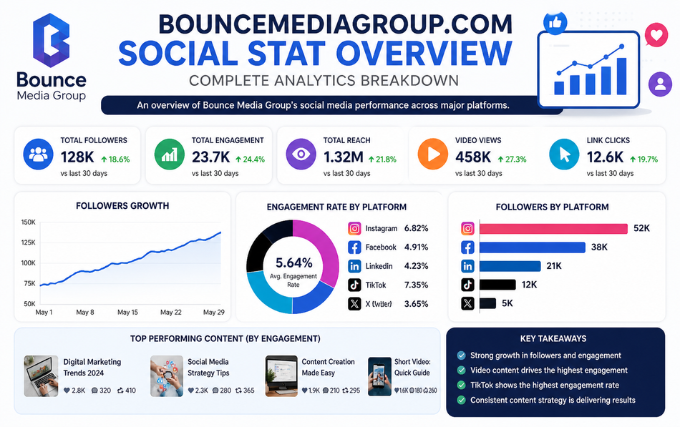
In the modern digital environment, social media presence is one of the strongest indicators of how well a brand is performing online. Every organization that operates in the digital space depends on performance data to understand how audiences interact with its content, how far its messages travel, and how effectively it builds an online identity.
The topic of bouncemediagroup .com social stat focuses on the overall performance indicators connected to Bounce Media Group across different social platforms. These indicators provide a clear picture of visibility, audience behavior, engagement levels, and content effectiveness.
Instead of simply looking at follower numbers or likes, these statistics help explain the deeper story behind how audiences respond, what type of content works best, and where improvements can be made.
Understanding Bouncemediagroup .com Social Stat
The term bouncemediagroup .com social stat refers to the collection of performance data gathered from social media platforms where Bounce Media Group is active. These platforms may include Instagram, Facebook, LinkedIn, TikTok, and others depending on the brand’s activity.
These statistics generally include:
- Audience growth over time
- Engagement levels (likes, comments, shares, reactions)
- Content reach and visibility
- Video performance and watch time
- Audience demographics and behavior patterns
- Platform-specific performance comparisons
In simple terms, these numbers help explain how effectively Bounce Media Group connects with people online and how its content performs in different digital spaces.
Rather than being just numerical data, these insights act as a reflection of audience interest and content relevance.
Why Social Performance Data Matters
Understanding social performance is important for any digital brand because it helps in evaluating success beyond surface-level visibility.
For Bounce Media Group, these insights matter for several reasons:
First, they show whether the audience is growing steadily or remaining stagnant. Growth indicates that more people are discovering the brand and engaging with its content.
Second, they highlight how audiences respond. High engagement usually means the content is relevant, interesting, or valuable to viewers.
Third, they help identify which platforms are performing better than others. This allows more focus on channels that bring stronger results.
Lastly, they provide direction for future content creation by showing what works and what does not.
Without these insights, it would be difficult to improve or refine online strategy in a meaningful way.
Core Elements of Social Performance Analysis
To understand bouncemediagroup .com social stat clearly, it is important to break it down into its main components.
Audience Growth
Audience growth refers to how the number of followers or subscribers increases over time. This is one of the first indicators of online visibility.
For Bounce Media Group, steady audience growth suggests that more users are discovering the brand through shared content, recommendations, or platform algorithms.
However, growth alone does not define success. It must be supported by interaction and engagement to show real impact.
Engagement Activity
Engagement is one of the most important indicators of content performance. It includes actions such as likes, comments, shares, saves, and reactions.
High engagement means that users are not just viewing content but actively interacting with it.
For Bounce Media Group, strong engagement indicates that content resonates with the audience. This could be due to useful information, appealing visuals, or relatable messaging.
Engagement also helps platforms prioritize content, making it more visible to other users.
Visibility and Reach
Visibility is measured through reach and impressions.
Reach refers to the number of unique users who see a post, while impressions measure how many times it appears on screens.
If reach is high, it means content is being discovered by new audiences. If impressions are high, it means content is being viewed multiple times by users.
For Bounce Media Group, strong visibility suggests that its content is being widely distributed across social platforms.
Content Performance
Content performance focuses on how individual posts or media types perform compared to others.
Common content formats include:
- Short videos
- Educational posts
- Industry insights
- Visual storytelling content
- Informational graphics
Analysis of Bounce Media Group’s performance shows that visually engaging content and short-form videos tend to attract more attention and interaction compared to text-heavy posts.
This indicates that audiences prefer quick, visually appealing, and easy-to-understand content formats.
Platform Behavior Differences
Each social platform has its own audience behavior and content style.
For example:
- Visual platforms focus on images and videos
- Professional platforms focus on insights and discussions
- Community platforms focus on sharing and interaction
- Short-video platforms focus on entertainment and quick information
Bounce Media Group adjusts its content depending on the platform it is using. This helps maximize performance and reach different types of audiences effectively.
Platform-Wise Performance Insights
Understanding how Bounce Media Group performs on each platform helps create a clearer picture of its digital presence.
Visual Content Platforms
On visually driven platforms, content performance is often measured through likes, shares, and saves.
Bounce Media Group tends to perform well in this environment when it uses strong visuals, short videos, and creative storytelling. These formats encourage users to engage quickly and share content within their networks.
Community-Oriented Platforms
On platforms focused on community interaction, discussions and post sharing play a major role.
Here, Bounce Media Group benefits from content that encourages conversation or provides useful insights. Posts that ask questions or share valuable knowledge tend to perform better.
Professional Networking Platforms
On professional platforms, content is more focused on expertise and industry knowledge.
Bounce Media Group’s performance in this space is typically driven by informative posts, business insights, and thought leadership content. This helps establish credibility and trust among professional audiences.
Short-Video Platforms
Short-video platforms are driven by fast-paced, engaging content.
Bounce Media Group performs strongly in this area when content is creative, concise, and visually engaging. These platforms offer high potential for rapid audience growth due to their algorithm-driven distribution systems.
Audience Understanding and Behavior
Audience behavior plays a major role in shaping content strategy.
The audience engaging with Bounce Media Group generally includes individuals interested in:
- Digital marketing
- Business growth
- Online content trends
- Social media strategies
- Creative media production
Most users prefer content that is quick to consume, visually appealing, and informative.
Younger audiences often engage more with video content, while professional audiences prefer detailed insights and structured information.
Understanding these differences helps improve content effectiveness across platforms.
How Performance Data Influences Strategy
Performance insights are not just observational—they actively shape decision-making.
For Bounce Media Group, these insights help in several ways:
They guide content creation by showing which topics perform best. They help determine the best posting times based on audience activity. They also influence platform selection by highlighting where engagement is strongest.
Additionally, they help refine messaging so that it better aligns with audience expectations and interests.
Over time, this leads to improved consistency and stronger online presence.
Challenges in Interpreting Social Performance
While performance data is valuable, it also comes with challenges.
One challenge is that numbers alone do not always tell the full story. For example, high views do not always mean high engagement.
Another challenge is changing platform behavior. Social platforms frequently update their systems, which can affect visibility and engagement patterns.
Additionally, audience behavior is not static. Interests and preferences can shift over time, making it necessary to continuously adapt.
Because of these challenges, performance data must always be interpreted with context and not in isolation.
Future Direction of Social Performance Tracking
The future of digital performance tracking is moving toward more advanced and intelligent systems.
In the coming years, we can expect:
- More detailed audience segmentation
- Real-time performance tracking
- Deeper behavioral analysis
- Smarter content recommendations
- Improved predictive insights
For Bounce Media Group, this means even more precise understanding of audience behavior and content performance.
These improvements will help create more targeted and effective content strategies.
Conclusion
The bouncemediagroup .com social stat overview provides a detailed understanding of how Bounce Media Group performs across digital platforms. It highlights important aspects such as audience growth, engagement activity, content performance, and platform behavior.
Instead of focusing only on surface-level numbers, these insights reveal how audiences interact with content and what drives their interest.
By analyzing these patterns, Bounce Media Group can continue improving its digital presence, refining its content strategy, and building stronger connections with its audience.
In a constantly evolving digital environment, understanding performance is essential for long-term success, and these insights play a central role in that journey.
