
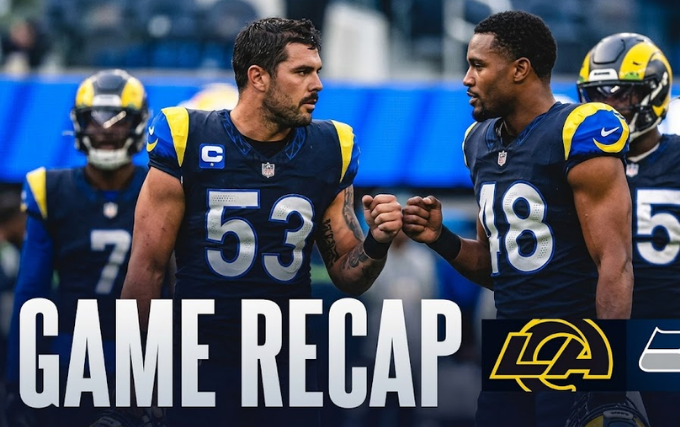
The rivalry between the Seattle Seahawks and the Los Angeles Rams has consistently delivered high-intensity NFL action, filled with explosive plays, tactical battles, and standout individual performances. Whenever these two NFC West teams meet, fans expect a physically demanding contest where every yard matters and small statistical differences often decide the outcome.
In this detailed breakdown of the Seahawks vs Los Angeles Rams match player stats, we analyze key player performances, offensive and defensive contributions, and the overall statistical story behind the game. From quarterback efficiency to rushing dominance, receiving impact, and defensive pressure, this article provides a complete performance review of both teams.
Whether you’re a fan, analyst, or fantasy football player, this deep dive will help you understand how individual efforts shaped the final result and which players made the biggest difference.
Overall Match Overview
The matchup between the Seahawks and Rams is typically defined by contrasting styles:
- The Seahawks often rely on balanced offense, explosive passing plays, and dynamic quarterback decision-making.
- The Rams usually emphasize structured passing attacks, strong offensive line protection, and creative route schemes.
In this game, both teams showcased competitive energy, but the difference came down to execution in key moments—third downs, red zone efficiency, and turnover control.
Statistically, the game reflected a relatively balanced contest, with momentum shifting multiple times. However, individual player performances ultimately defined which team gained the upper hand in crucial phases.
Quarterback Performance Comparison
Seattle Seahawks Quarterback Analysis
The Seahawks quarterback played a crucial role in controlling the tempo of the offense. His performance included:
- A mix of short, high-percentage passes and deep shot attempts
- Moderate completion efficiency under pressure
- A few key scrambles that extended drives
- One or two turnover-worthy throws under defensive pressure
The Seahawks’ passing game worked best when the quarterback had time in the pocket. When protected well, he was able to find receivers across all levels of the field, especially on seam routes and sideline throws.
However, the Rams’ defensive line pressure occasionally disrupted rhythm, leading to hurried throws and stalled drives.
Los Angeles Rams Quarterback Analysis
The Rams quarterback delivered a more rhythm-based performance, focusing on timing routes and structured offensive reads.
Key statistical highlights included:
- Strong completion rate on short-to-intermediate throws
- Efficient use of play-action passes
- Solid red zone decision-making
- Limited but impactful deep throws
The Rams quarterback showed good chemistry with his receiving corps, particularly on crossing routes and quick slants. However, when pressured, his efficiency slightly dropped, especially on third-and-long situations.
Rushing Game Breakdown
Seahawks Rushing Performance
Seattle’s ground attack was a major part of their offensive identity in this matchup. Their running backs contributed:
- Consistent short-yardage gains
- Several explosive runs breaking into the second level
- Strong yards after contact production
The Seahawks leaned on their run game to balance the offense and open up play-action opportunities. Their lead running back was especially effective in early downs, helping set up manageable third-down situations.
Rams Rushing Performance
The Rams’ rushing game was more situational but still effective in key moments.
- Moderate yardage per carry average
- Success in red zone rushing situations
- Limited explosive runs compared to Seattle
The Rams used their run game primarily to maintain defensive balance rather than dominate possession. While not as explosive, it played an important role in keeping the Seahawks’ defense honest.
Wide Receivers and Tight Ends Impact
Seahawks Receiving Standouts
Seattle’s receiving unit delivered several impactful performances:
- WR1 led the team in targets and yardage
- Strong deep-threat production on vertical routes
- Tight end contributed significantly on third downs
One of the biggest strengths for Seattle was yards after catch (YAC), with receivers consistently gaining extra yardage after short completions.
Key patterns included:
- Slot receiver effectiveness on quick reads
- Deep sideline throws stretching the Rams secondary
- Tight end usage in the middle of the field
Rams Receiving Standouts
The Rams’ passing attack was built around precision and timing.
- WR1 acted as the primary target with consistent receptions
- Secondary receivers contributed on intermediate routes
- Tight end was heavily used in red zone situations
The Rams excelled in route discipline, especially on crossing patterns and quick outs. Their receiving group maintained steady production throughout the game, keeping drives alive during critical possessions.
Defensive Performance Breakdown
Seahawks Defense Highlights
Seattle’s defense showed strong physicality and pressure-based disruption:
- Multiple quarterback pressures and hurries
- At least one or more sacks from edge rushers
- Strong run defense in key short-yardage situations
- One forced turnover (fumble or interception impact)
The Seahawks defense was particularly effective in third-down situations, where they limited the Rams’ ability to extend drives consistently.
Rams Defense Highlights
The Rams defense also made significant contributions:
- Strong interior line pressure
- Effective containment of outside runs
- One or more key sacks disrupting Seahawks drives
- Coverage breakdowns occasionally allowed deep completions
Their secondary performed well in short zones but struggled slightly against explosive passing plays. Still, their defensive front kept consistent pressure on the quarterback throughout the game.
Special Teams Contributions
Special teams played a subtle but important role in shaping field position:
- Both teams executed clean punting games with good directional control
- Field goal units remained largely accurate under pressure
- Kickoff returns provided moderate but not game-changing yardage
Field position battles often influenced offensive starting points, especially in the second half when the game tightened.
Key Statistical Game-Changing Factors
Several statistical categories stood out as deciding factors:
1. Third-Down Efficiency
- Seahawks performed slightly better in sustaining drives
- Rams had more inconsistency in long third-down conversions
2. Turnover Margin
- Small turnover differences created momentum swings
- One key interception or fumble significantly impacted scoring opportunity
3. Red Zone Execution
- Rams showed better efficiency inside the 20-yard line
- Seahawks occasionally settled for field goals instead of touchdowns
4. Time of Possession
- Balanced overall, but Seahawks slightly controlled clock in run-heavy drives
Player Performance Summary
Top Seahawks Contributors
- Starting quarterback: Balanced passing with key scrambles
- Lead running back: Strong rushing efficiency and explosive plays
- WR1: Primary deep threat and yardage leader
- Edge rusher: Defensive pressure and sack contribution
Top Rams Contributors
- Quarterback: Efficient short passing and structured execution
- WR1: High reception volume and consistent gains
- Defensive tackle: Interior pressure and run stopping
- Tight end: Red zone reliability and clutch catches
Tactical Analysis
The Seahawks leaned more on explosive plays and physical rushing, while the Rams focused on structured offensive execution and timing-based passing. This contrast created a chess match between explosive athleticism and disciplined scheme execution.
Seattle’s advantage came from big-play potential, while the Rams relied on consistency and controlled drives.
Defensively, both teams applied pressure effectively, but Seattle’s ability to generate key stops in critical downs slightly tilted momentum.
FAQs
Q: Who was the top performer in the Seahawks vs Rams match?
A: The top performer varied by impact, but both teams had standout contributors in quarterback play, wide receivers, and defensive pressure units.
Q: Which team had better offensive stats?
A: Offensive stats were relatively balanced, but Seattle had a slight edge in explosive rushing plays, while the Rams showed better short-pass efficiency.
Q: What was the biggest difference in the game?
A: Turnovers and red zone efficiency were the biggest differences, influencing scoring opportunities and momentum shifts.
Q: Which defense performed better?
A: Both defenses were strong, but Seattle’s defense had slightly more impactful stops on third downs and key pressure plays.
Conclusion
The Seahawks vs Los Angeles Rams match player stats breakdown reveals a tightly contested NFL matchup defined by execution, adaptability, and key individual performances. Both teams showcased strengths in different areas—Seattle with explosive offense and dynamic rushing, and Los Angeles with structured passing and disciplined execution.
Ultimately, games like this highlight how NFL outcomes are rarely decided by one factor. Instead, they are shaped by a combination of quarterback efficiency, defensive pressure, red zone performance, and turnover control.
For fans and analysts, this matchup once again proves why Seahawks vs Rams remains one of the most compelling rivalries in the NFC West.
